Saturday, October 26, 2013

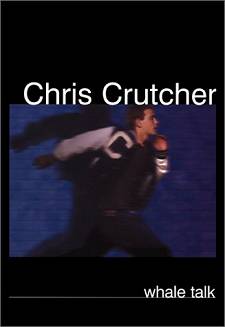
Whale Talk by Chris Crutcher

From the back of the novel:

There's bad news and good news about the Cutter High School swim team.  The bad news is they don't have a pool.  The good news is that only one of them can swim anyway.
A group of misfits brought together by T.J. Jones (the J is redundant), the Cutter All Night Mermen struggle to find their places in a school that has no place for them.  T.J. is convinced that a varsity letter jacket--unattainable for most, exclusive, revered, the symbol (as far as T.J. is concerned) of all that is screwed up at Cutter High--will be an effective tool.  He's right.  He's also wrong.
Still it's always the quest that counts.  And the bus on which the Mermen travel to swim meets soon becomes the space where they gradually allow themselves to talk, to fit, to grow.
Together they'll fight for  dignity in a world where tragedy and comedy dance side by side, where a moment's inattention can bring lifelong heartache, and where true acceptance is the only prescription for what ails us.

T.J. Jones has had one set goal throughout his academic high school career.  Not to play sports.  He's very good at athletics, in fact he's better than most others, but he doesn't like to be told what to do which contradicts all sports and their coaches.  So, he only participates in recreation sports--pick up basketball games, a local tournament or two, but he has never played for his school, Cutter High. But for whatever reason unbeknownst to us, when Mr. Simet approaches T.J. about his idea for starting a swim team for Cutter High, T. J. entertains the idea.

It's odd that T.J. Jones has compiled a group of misfits who have never belonged together more than they do now.  As the team travels to swimming competitions, the bus rides become "group therapy sessions."  What first began as T.J.'s mission to have the swim team, the Mermen, earn the coveted letter jackets, has soon turned into blossoming friendships and a support system he needs--as well as all the other students.  T.J. also takes pleasure working with children who are physically, emotionally, or otherwise abused.  Heidi, a traumatized child who repeatedly tries to wash the brown off her skin (she is biracial) has been emotionally abused by T.J.'s archenemy: Rich Marshall, who is an athletic all-star, racist, stalker, psychopathic, pos (piece of *hit!).  [The author does an incredible job getting the reader to hate this guy...and I hated him.  I hated him, because I know so many people who are just like him, it scares me.]

More than anything, this is a novel "warning [me] that this kind of pain exists in the world." (page 131) As T.J. is having a very intimate conversation with his father, his dad says probably the most profound explanation I've read (to date) on being understood. He says,

A whale unleashes his cry, and it travels hundreds or even thousands of miles. Every whale in the ocean will at one time or another run into that song. And I figure whales probably don't edit. If they think it, they say it. If some man-whale cheats on his wife, her anguish, her rage, her despair, is heard and understood by every whale who swims into the range of her voice. The joy of lovemaking, the crippling heartache of a lost child--it's all heard and understood. Predators and prey have equal voice. The Mother Teresa whales and the Jeffrey Dahmer whales all have their say. Whale talk is the truth, and in a very short period of time, if you're a whale, you know exactly what it is to be you. (page 131)

Themes that are prominent throughout the novel are bullying, racism, abandonment, anger, overcoming tragedy.  I was completely taken by surprise by its ending.  I can say its one of the best books I've read!

*There is explicit language used throughout the novel.

You can buy Whale Talk here.  Visit Chris Crutcher's website here.

Tuesday, October 15, 2013

Tears of A Tiger by Sharon M. Draper

From the back of the novel:

Andy Jackson was driving the car that crashed one night after a game, killing Robert Washington, his best friend and the captain of the Hazelwood High Tigers.  It was late, and they'd been drinking , and now,k months later, Andy can't stop blaming himself.  As he turns away from family, friends, and even his girlfriend, he finds he's losing the most precious thing of all--his ability to face the future.

This book is very unique in its writing style.  It's written in several different styles (letters, articles, homework assignments, and dialogues) as friends cope with the death of their fellow classmate, Robert Washington.  Because of the writing style, "Tears of A Tiger" reads fairly quickly and would be a perfect "read aloud" novel in any middle grades Language Arts classroom.  Assigning students speaking parts will help eliminate any confusion when the dialogue speaker suddenly changes without introduction.  The writings incorporate dialect and informal conversation into the novel, which add to its realism and relevancy.  This was my first exposure to a novel that uses multiple writing styles, but I admit--I liked the variety!  It kept me interested and turning the pages!!

Andy is having a troublesome time overcoming the death of Robert.  He feels as if his girlfriend Keisha has helped him most.  "Keisha's cool.  If it hadn't been for the Keisha, I mighta really gotten depressed.  After the accident, Keisha was always there.  She came to the hospital, the funeral, to the trial.  She was the only one I could cry in front of and not be embarrassed.  My father kept telling me to put it behind me, to quit dwellin' on the past, to get on with my life, but Keisha said stuff like, 'I know it hurts, baby--go ahead and let it out.'" (page 75)  This is our first glimpse at an unhealthy dependency that Andy has on Keisha to get him past Robert's death.  As most of Andy's friends seem to be moving on with their lives, Andy is simply going through the motions of life--showing very little effort in anything other than basketball.

Stereotypes are another area that Andy struggles to overcome.  As a young black student, he makes himself feel inferior to other white students.  I really enjoyed the wisdom that Draper used from the class' English teacher when the topics of white/black come in class discussion.  Ms. Blackwell says, "It's society that implants positives or negatives onto certain ideas.  You have the option to accept, reject, or change the stereotypes that currently exist." (page 86)  I felt this was a very powerful response--one that students today need to hear!
As the novel progresses we sense an internal battle going on within Andy's head.  He feels like he is drowning in sorrow and guilt, and one part of him feels he needs help to over come it while the other part of him feels as if he can handle it on his own.  When life becomes unbearable, Andy reaches out to other people who seem occupied in his moment of need.  He ends his life without thinking of how his suicide will affect those left behind: his friends from school, his family, or his little brother.

Themes which emerge throughout the novel include: underage drinking, drinking and driving, guilt, consequences, lack of parental support, race, education and earning good grades, peer pressure, depression, teen relationship dependency, isolation, suicide, and death.

To purchase "Tears of a Tiger" (or the other books in the trilogy, you can go here, here, and here.
Visit the website of Sharon M. Draper to learn more about her and her other writings!


Monday, October 14, 2013

A Day No Pigs Would Die by Robert Newton Peck


"A Day No Pigs Would Die" is a historical fiction novel set on a Vermont farm and portrays the love of a father and son who is coming into manhood.  As I was reading the first few pages, I was taken into the older era where mostly incomes were earned by farming and hard work.  The vivid descriptions given by the author, Robert Newton Peck, have a way of taking you to a place long forgotten by the busyness of life.  At only 139 pages, it can be read in one sitting or broken up over a few days and completely finished.

Peck states, "He [Papa] bent down and pulled the crazy quilt up around my throat.  I could tell by the smell of his hand that he'd killed pigs today.  There was a strong smell to it, like stale death.  That smell was almost always on him, morning  and night.  Until Saturday, when he'd strip down to the white and stand in the kitchen washtub, up to his shins in hot soapy water, and wash himself clean of the pigs and the killing...when you kill pigs for a living, you can't always smell like Sunday morning.  You just smell like hard work." (page 19-20) Papa reminds me of my own father who is one of the hardest workers I know.  My dad constantly works on vehicles, lawn mowers, anything that is broken, really.  His hands always smell of grease or other auto shop smells.  My dad uses a special soap to help take the grease off or even the smell of gasoline, but as I stop to reminisce childhood memories, I can smell that shop soap.  It has a distinct smell which is recognizable. Now I can infer that may be what hard work actually smells like.

The novel sneaks in tid-bits of history during the early 1920s when Calvin Coolidge was President. Throughout the novel, we are reminded of how men once tended the fields while women tended their homes.
As payment for young Roberts help in delivering a baby calf and saving his neighbors prized cow, Apron, Mr. Tanner rewarded Robert with a young pig which he names Pinky.  "She was the first thing I had really wanted, and owned.  At least, the first thing of value."(page 27)  As I turned the pages, I was taken to years past when there wasn't much more to life than Plain People.  Farming was a way to make an honest living and was often passed from generation to generation.  Mr. Tanner, Robert's neighbor, said, "What better can a man be?  There's no higher calling than animal husbandry, and making things live and grow.  We farmers are stewards.  Our lot is to tend all of God's good living things, and I say there's nothing finer."  (page 122)

As we turn every page and begin every new chapter we slowly see Robert's coming of age.  He is partly a man now expected to tend to the farm once his dad's health ailes.  Yet, we still see a snippets of a young adolescent who has big dreams (such as owning a store bought coat one day).  Although Pinky was meant to be a productive member of Robert's farm, as a barren sow she never would help earn income to pay off the farm.  She was only a pet, at best.  The title foreshadows what will come of Pinky's demise.  The details will tug at your heart strings while your eyes fill with tears.  Anyone who has shared the bond between a pet and owner can connect to the emotions Robert feels in those fatal moments.  We witness a private internal battle as Robert witnesses his first butchering--that of his beloved Pinky.  He is given gentle words of wisdom by his father, "That's what being a man is all about, boy.  It's just doing what's got to be done." (page 129)  

Relevant themes which I noticed throughout the novel include: fairness, the ideas of "being rich" and "being poor," the importance of education, and death.

No review I could give would be more accurate than the one I found on the inside cover:
"A small, rich, wise book full of pathos and an essential home-bred humanity that is becoming more and more scarce in the world.  It lights up a way of life that is not so long past and shows...how very much we have lost."  --Winston Graham

Concerns:
There are a few instances of foul language in the text.  Nothing too vulgar, but some parents may not want their kids reading any cuss words.
  
If you want to take peak inside of the book or purchase it, you can go here.  You can go to Robert Newton Peck's page to learn more about the author.

Friday, October 11, 2013

Touching Spirit Bear by Ben Mikaelsen

I just finished reading "Touching Spirit Bear" by Ben Mikaelsen.  This is from the back cover:

Whatever you do to the animals, you do to yourself.  Remember that.  At fifteen, Cole Matthews has been fighting and stealing for years.  The punishment for smashing Peter Driscal's skull into the sidwalk--his most recent crime--is harsh.  This time, Cole will have to choose between prison and Native American Circle Justice.  He will live either behind bars or in isolation for one year.  Cole chooses Circle Justice.  But in the first days of his banishment to a remote Alaskan island, he is mauled by a mysterious white bear and nearly dies.  Will the attack of the spirit bear destroy Cole's life or save his soul?

Reflection:
I was so touched by this young adult novel from the moment that I read its first few pages.  Cole, a young adult oftentimes with a bad attitude, could have been any number of classmates I had.  He never wanted to accept accountability for his poor decisions.  His parents could have been any parents: newly divorced and preoccupied with careers and social lives.  His dad could have been a classmate who was physically and/or emotionally abused on a daily basis.  Cole's bitterness and anger at a world who had failed him could have been mine.

Touching Spirit Bear deals with many adult-like issues and provokes the reader to answer questions when fighting one's own demons, " What was death like?  Did it hurt?  Did it come fast like lightening from the sky or a blow from the Spirit Bear?  Did death sneak around like a stinking seagull, trying to snatch life from a body like meat chunks from a rotting carcass? Or did life just flicker out like a dim candle?" (page 71)

As an alternative to jail time, Cole feels that being sequestered on an Alaskan island would be a more suitable alternative.  He soon realizes that "What a fool he had been to come here instead of going to jail.  Atleast in jail he would have been in the safety and comfort of a cell.  He would have had some control.  Here he was powerless, nobody to control, nobody to blame.  Every action worked against him and hurt him." (page 73)

Surviving my young adolescent years was difficult.  Much like Cole, I felt that the world owed me something in return for my half-hearten effort.  Sometimes we are filled with such confusion that like Cole, we fail to realize, "the world was beautiful." (page 97).  Anger, bitterness, trust, regret, and other relevant themes will emerge throughout the pages of Part One: Touching Spirit Bear.

New essential questions emerge in Part Two:  Return to Spirit Bear.  "What was the one thing that would help him [Cole Matthews] heal?  And how could he become invincible?" (page 188).  If I were teaching this novel in my classroom, I would have students to ponder upon each of these ideas.  Perhaps the most obvious themes in Part Two are forgiveness and healing.

Although I am a bit of a skeptic, Circle Justice has been practiced by native cultures for many.  You can read more about that here.  Spirit Bears actually do exist of the coast of British Columbia, and you may read more about those here.

Concerns:
If you have students who may have a squeamish stomach, you may want to sensor out some of the survival techniques.  There aren't many gruesome incidents, but as someone who has a sensitive stomach, I did have to fight the urge to gag.  It's nothing more than what most kids have seen watching Survivor on CBS, but my stomach won't allow me process those situations.  It's a mental thing, I'm sure.

If any of your students come from foster homes due to physical or emotional abuse, this novel my open some old wounds.  With this said, it is a beautiful story of healing and moving beyond the anger of being a victim.

If you'd like to read Touching Spirit Bear it can be purchased here.  Visit the author's website to learn more about Ben Mikaelsen.

Tuesday, May 29, 2012

To Save a Life by Jim & Rachel Britts


I recently read "To Save a Life" by Jim and Rachel Britts.  It was the first time I have read Christian young adolescent fiction, and I found it to be very believable as well as relevant to what young adults face in everyday life.  Some of the topics covered include:  alcohol abuse, drug use, premartial sex, suicide, bullying, peer pressure, parental control, lack of parental interest, living up to standards set by society/parents/peers, teenage pregnancy, contemplation of abortion/adoption, and finding one's own identity.  The most important reoccurring theme is "making your life count."

Summary:
I fell in love with Jake.  He is an All-American jock, every day good guy, who struggles with living up to the expectations of his parents as well as his peers.  He is well liked by everyone who meets him, and he has worked hard to earn a scholarship to play basketball for Louisville--his life long dream!

After an unexpected turn of events, Jake is haunted by the guilt of Roger's suicide, his former best friend.  Over time, Roger and Jake have drifted apart.  There friendship takes a nose dive when Jake chooses to attend a high school party rather than hang out with his friend.  They haven't spoken in years...

As Jake attends the burial services for Roger, he begins to question his life and its purpose.  Jake is befriended by Chris, youth pastor at a local church.  Chris encourages Jake to develop a relationship with Christ.  Chris says, "If you are willing--I mean really, truly willing--to search hard, and to ignore everything that friends might say or whatever might happen, I'm telling you, Jake, you're going to find that He's more worth it." 

As Jake determines to live an authentic life that reflects Christ, he becomes the victim of ridicule from his friends, his girlfriend breaks up with him, his parents arguments are becoming more frequent...life seems to be getting harder.  As Jake shares his frustrations with Chris, he reminds Jake that "God's not some genie, or a vending machine, or someone who magically solves every issue for you.  And He's not 'worth it' because he makes your life all better and all your problems disappear. That's not how He works."  Then he reminds Jake, "But God is on your side."
Overall, this was an enjoyable and quick read.  It will remind you that faith is a journey.  It reminds you that life is too short to wait for God to use you.  Instead, it encourages you to allow God to use you NOW.  You just may Save a Life. 

You can buy the book or read an excerpt here.   You can read more about the authors, Jim & Rachel Britts and their ministry here.  There is a sequel, called "Jake's Choice" that picks up where this story leaves off.  (I do plan to add this to my reading list.)

Friday, March 11, 2011

By The Time You Read This, I'll be Dead by Julie Anne Peters

I just finished reading


I was immediately enthralled by the cover of BY THE TIME YOU READ THIS, I'LL BE DEAD. It was a quick read at only 200 pages, yet it also was an uncomfortable read. I couldn't read it in one sitting because I wanted time to really analyze what I was reading. Julie Anne Peters does such a wonderful job diving into the head of teenager who feels hopeless. There were times I could feel Daelyn's pain jumping off of the pages at me. Daelyn is trapped in a life she cannot stand. She has tried numerous times to end her own life, and her resulting failures only add to her anguish that she shouldn't exist. The plot is centered on a message board that Daelyn stumbles across during an internet search. It turns out to be a message board of all individuals who are contemplating ending their own lives. Once she enters the website, she has only 23 days until the day of the deed. Each chapter counts back as the days tick away.

I read this book trying to incorporate two points of view. I wanted to consider the impact of bullying on the receiver. The similarities to what Daelyn lived through--her own private hell during her primary years--was eerily similar to some of the teasing I can recall as a young student. For this reason alone, the novel feels real. She hears so many negative comments from her peers, mostly directed towards her weight that she begins to believe them to be true. However, I also wanted to read this book from the point of view of a parent/educator. What were the warning signs Daelyn gave for her deep depression? She was so isolated, she never made eye contact with anyone, and her self-esteem had plummeted. How could the influential adults in her life not notice she is once again contemplating her own death? For this reason, also, the novel felt real. Every day suicide occurs among young adults and there are typically warning signs gone unnoticed.

For this novel, I would want to know more about the reader. It gives numerous ways to end one's life, and even goes as far as to tell how painful the deed would be. On one hand, I wouldn't want to put this book into the hands of a student who feels similar to Daelyn, completely hopeless. However, there are several useful resources listed in the back for bullying and suicide that would be helpful knowledge for most young adults.

I do love the way the author tries to portray Daelyn as a stronger person towards the end of the novel. I was certainly left with questions lingering, which educators will love. There is room to be creative. The discussion questions at the end are also really helpful to dive into the novel and examine your own predefined notions. More importantly though it will allow anyone who has noticed bullying, been bullied, or is a bully see how devastating and detrimental that teasing someone can be.

The only negative things I can say about BY THE TIME YOU READ THIS, I'LL BE DEAD are:
* Each participant of the message board is assigned a Jane Doe user name; it can become confusing at times when the writers are changing'
* This novel also uses quite a bit of profanity, but does not allude to any sexual connotations.
* I didn't like the ending; I wanted to know more.

You can buy the book here. You can visit Julie Anne Peter's website here.

Thursday, February 24, 2011

Bayou (Volume One) by Jeremy Love


I just finished reading Bayou (Volume One) by Jeremy Love. This was my first encounter with a graphic novel, and I am impressed. It's not a book that you will stay awake all night reading. You can read it cover to cover in about an hour. A graphic novel uses artwork to replace most of its words, so there is very little writing. You will spend more time analyzing the artwork to follow the plot than you will spend actually reading the story. With this said, the artwork is very powerful. It conveys many emotions and deals with some of the "not so nice" parts of American history, specifically Southern racism.

Directly from the back of the text:
South of the Mason-Dixon Line lies a strange land of gods and monsters that only Lee Wagstaff is aware of. When a terrifying creature emerges from the swamp and snatches her white playmate, Lee's father is accused of the kidnapping. In order to save her father from neing lynched, Lee must rescue her friend from this fantastic and frightening world, born from centuries of slavery and civil war. Her only guide is the blues-singing swamp monster called Bayou. Together they treck across a hauntingly familiar Southern Neverland, on a journey that will drastically alter both their lives... Bayou (Volume 1) collects the first four chapters of the critically acclaimed webcomic series by Glyph Award nominee Jeremy Love (Chocolate Thunder, Fierce).

Summary:
Love plays on the phenomenon of a fantasy-like world where Lee, a young African American girl, sets out to save her father by delivering the truth. Her daddy has been accused of a crime that he did not commit. In a "white world" he is destined to be lynched. Lee wants to prove his innocence. The world she ventures into mirrors the world she lives in." I believe that the Kansas City Star sums it best by saying this novel is "Spellbinding...powerful stuff, filled with hope and hate and trust and betrayal." The truth is, our world can be not so pleasant at times. This should not surprise anyone, but may leave younger readers full of questions and mixed emotions.

Lingering Thoughts:
Due to its content, I would recommend this novel to mature young adult readers. The artwork may appeal to a younger reader, but the theme of the story isn't to be taken lightly. Racism has been deeply rooted in the South, and that is not new to us. However, younger readers may be deeply affected by some of the graphics (including lynchings, a child being swallowed by a giant, "violence" in general, etc.). I only recall one instance where profanity was used.

It will leave you hanging, so I encourage you to purchase Volume Two with this book. There will be a Volume Three available in the future.

Click here to read more about the author, Jeremy Love. Click here to buy it!

Tuesday, January 4, 2011

The Hunger Games by Suzanne Collins

I just finished reading


This is from the back cover of the book:
Once I'm on my feet, I realize escape might not be so simple. Panic begins to set in. I can't stay here. Flight is essential. But I can't let my fear show.

Winning means fame and fortune. Losing means certain death. The Hunger Games have begun.


The book trailer should intrigue you to read this novel.

The Hunger Games - Book Trailer from Sara Pyle on Vimeo.


Lingering Thoughts:
Wow! This book was hard to put down. It is the first of the series by Suzanne Collins based on war and its affects on young adolescents. With every dramatic twist and turn of its plot, I found myself wanting to know more. I thought Collins was brilliant to incorporate a "reality tv show" theme. It was also quite refreshing to see a female protagonist which often is over looked. The nature of the book itself will make it appealing to male readers, while the playful relationship between Katniss and Peeta (two of its primary characters) will appeal to female readers. I would classify their relationship as a modern day "showmance" for the entertainment of the audience who are watching The Hunger Games.

Although this book eludes to violent scenes, I wouldn't say they were any more graphic than what many of us dare to watch on primetime television.

I can not wait to see the movie that is set to begin production in 2011:


Click here to buy the book.

Click here to learn more about Suzanne Collins.

Monday, May 24, 2010

The Last Song by Nicholas Sparks

I just finished reading


This is from the back cover of the book:
Seventeen year old Veronica "Ronnie" Miller's life was turned upside-down when her parents divorced and her father moved from New York City to Wrightsville Beach, North Carolina. Three years later, she remains angry and alienated from her parents, especially her father...until her mother decides it would be in everyone's best interest if she spent the summer in Wilmington with him. Ronnie's father, a former concert pianist and teacher, is living a quiet life in the beach town, immersed in creating a work of art that will become the centerpiece of a local church. The tale that unfolds is an unforgettable story of love on many levels--first love, love between parents and children -- that demonstrates, as only a Nicholas Sparks novel can, the many ways that love can break our hearts...and heal them.

Lingering Thoughts:
This is a great book! I do not recall any usage of inappropriate language or content, so I believe it is completely safe for all age groups to read. As a Christian, I really appreciated Sparks' intertwining Christian principles within the story line, such as the importance of having a healthy relationship with God and an active prayer life. Although Christianity is mentioned, it isn't overpowering.

One characteristic that really stood out to me was Ronnie's relationship with her parents. I found it to be much like the relationship I shared with my parents at her age. I, too, was rebellious teenager eager to take on the world. Now, as a parent, I valued the attitude and parenting style of Ronnie's father. He tried to reach Ronnie on so many different levels, but he never force their relationship on her. He loved Ronnie enough to give her the space she needed to grow up as a young woman. This, in my opinion, had to be so unimaginably difficult for him. However, I feel he knew that was important in allowing Ronnie to see her need for family.

Another aspect of the novel's theme which resonated with me was the affects of associating with certain peer groups. For this reason alone, I recommend this novel to young adolescents. It easily illustrates how falling into the wrong peer groups can change one's life. In fact, it almost costs one character, Blaze, her life.

My only complaint of this novel was that I found it to be a bit predictable. Half way through the novel, I knew what the ultimate outcome was going to be, so I wasn't in a hurry to finish it--it didn't really leave me on the edge of my seat needing to know more NOW.

I am excited to see the movie when it comes out on DVD to compare/contrast the book and theatrical production. Here is the trailer if you want to check it out:


Click here to buy the book.

Click here to learn more about Nicholas Sparks.

Wednesday, January 13, 2010

The Shack by William Paul Young


This is from the back cover:
Mackenzie Allen Philips's youngest daughter, Missy, has been abducted during a family vacation and evidence that she may have been brutally murdered is found in an abandoned shack deep in the Oregon wilderness. Four years later, in the midst of his Great Sadness, Mack receives a suspicious note, apparently from God, inviting him back to that shack for a weekend.

Against his better judgement he arrives at the shack on a wintry afternoon and walks back into his darkest nightmare. What he finds there will change Mack's world forever.

In the world where religion seems to grow increasingly irrelevant THE SHACK wrestles with the timeless question: Where is God in a world filled with unspeakable pain? The answers Mack gets will astound you and perhaps transform you as much as it did him. You'll want everyone you know to read this book!


Lingering Thoughts:
I love that this book addresses many of the questions that we ask ourselves day to day. I hate that it uses the pain of a family to answer said questions. We've all been a predicament where we ask ourselves, "What if I had only did...? What if I hadn't done....?" These are questions that Mack wrestles with after the abduction of his daughter, Missy. He places blame on himself (and GOD) for the terrible circumstances surrounding her disappearance. He finds himself asking, as I am sure you can relate to in midst of tragedy, "Where is God in my pain?" I felt this way while enduring infertility for five years. I wondered "Why me?" instead of "Why not me?" I felt forsaken by God or punished for past sins. All of these emotions made me feel even more inadequate, but now, after reading a book that addresses many of these concerns, I don't feel so alone. I feel God truly does understand that "when all you can see is your pain, perhaps that is when you lose sight" of God (page 98).

I also loved how this book encompassed what God expects of us regarding forgiveness. Mac has a really troubling situation in which he must forgive someone who hurt him dearly. He struggles with how to forgive and justifies his hatred of this individual until God intervenes and shows him the freeing power of forgiveness.

A final important topic which this book alludes to is the humans ability to be judge and jury of our brothers/sisters. I felt complete conviction during the chapter in which Mac was to be the judge at the risk of saving only one of his children and forsaking the other. Wow! Completely powerful!

If you haven't picked up this book to read you should! It's really good!

You can buy the book here and visit the book's website here.

Wednesday, December 9, 2009

The Absolutely True Diary of a Part-Time Indian by Sherman Alexie


This is from the back cover:

Junior is a budding cartoonist growing up on the Spokane Indian reservation. Born with a variety of medical problems, he is picked on by everyone but his best friend. Determined to receive a good education, Junior leaves the rez to attend an all-white school in the neighboring farm town where the only other Indian is the school mascot. Despite being condemned as a traitor to his people and enduring great tragedies, Junior attacks life with wit and humor and discovers a strength inside of himself that he never knew existed.

Inspired by this own experiences growing up, award winning author Sherman Alexie chronicles the contemporary adolescence of one unlucky boy trying to rise above the life everyone expects him to live.


Summary:
This book is about stepping out of your comfort zone in order to achieve your dreams. It's about going against popular opinion and taking control of one's destiny. Junior is the first to leave his reservation. An extremely bright and intelligent student, Junior is frustrated by the current education he receives on his rez. After all, he discovers he is studying from the same text books which his mother once studied from. So, in one witty (yet courageous) moment, Junior decides to seek better education outside of of his rez, or in the "white-world."

His reservation doesn't take this decision lightly. He is chastised and criticized for being a traitor. He even loses his best friend, Rowdy. In hindsight, Junior feels he doesn't fit in anywhere; he no longer fits in on the rez and, at first, he isn't accepted by his new white friends either. This book touches on controversial topics such as racism, sexual connotations, alcoholism, poverty, and death. It also emphasizes the importance of forgiveness and family. There is some language and sexual references, but overall, this book is fantastic! I really enjoyed Alexie's writing style and found this novel to be comical. This is the second time I have read it. I would recommend it to high school students or "mature" middle graders because of the sexual connotations.


Lingering Thoughts:
There were so many important life lessons in this book. One of the most touching moments in the novel to me was when Junior's coach is trying to convince Junior that he can take on his former basketball team.
"I can do it," Junior said to his Coach, his teammates, to the world.
"You can do it," Coach said.
"I can do it."
"You can do it."
"I can do it."
"[Junior is thinking] Do you understand how amazing it is to hear that from an adult? Do you know how amazing it is to hear that from anybody? It's one of the simplest sentences in the world, just four words, but they're the four hugest words in the world when they are put together."

I really enjoyed that Alexie chose to portray the image of supportive parents, because so many young adolescent novels do not. I believe students will enjoy the drawings through out the novel. I believe they really add character to the novel and to Junior. Here is an example you would find:


Check out the author's website here!

You can buy the book or take a peak at the first few pages here.

Sunday, November 29, 2009

The Wednesday Letters by Jason F. Wright


This is from the back cover:

They died in each other's arms. But their secret-the letters-did not die with them. True love keeps no secrets.

Jack and Laurel have been married for 39 years. They've lived a good life and appear to have had the perfect marriage. With his wife cradled in his arms, and before Jack takes his final breath, he scribbles his last "Wednesday Letter."

When their adult children arrive to arrange the funeral, they discover boxes and boxes full of love letters that their father wrote to their mother each week on Wednesday. As they begin to open and read the letters, the children uncover the shocking truth about their past.

In addition, each one must deal with present-day challenges. Matthew has a troubled marriage, Samantha is a single mother, and Malcolm is the black sheep of the family who has returned home after a mysterious two-year absence.

The Wednesday Letters has a powerful message about forgiveness and quietly beckons for readers to start writing their own "Wednesday Letters."


Summary:
This is a feel good novel about miracles. Jack and Laurel's love--miracle. The forgiveness and compassion they have shown others--miracle. The transition the lives of their children will take--miracles. The Cooper's all too seemingly perfect marriage had been given the ultimate test. They survived the effects of this secret by prayer and their faith. Although this book does speak on Christian topics, the reader won't be turned off for that reason. It's an inspiring story of ultimate love and sacrifice. There is an epilogue at the end of the novel, so the reader isn't left wondering what happened next to the Coopers. You will have the entire story, and you will be left wanting to write your own Letters. After all, "History not recorded, is history lost." (I can't remember who said that, but it's true.) Can you imagine how Jack and Laurel's children came to treasure those letters? Priceless.

Lingering Thoughts:
Wow, what power there is in one tiny, little word: forgiveness. It's something you always want to receive, but have such a difficult time giving to others. I don't know how Laural/Jack did it? It also hints at other emotional topics, such as infertility (which we all know is near and dear to my heart), drinking/driving, running from your past, new beginnings, abortion, and so on. This is a great book. It's completely safe for most adolescent age groups to read.


Check out the author's website here. Wright is also doing a give-away for more of his titles, so be sure to register!

You can buy the book here.

Tuesday, November 17, 2009

The Foreshadowing by Marcus Sedgwick


This is taken strictly from the back cover of the novel:

It is 1915, a few months after the start of World War I. Seventeen-year-old Sasha is a sheltered English girl. Just as her brother, Thomas, longs to be a doctor, Sasha wants to be a nurse. As the hospitals fill with young soldiers, she gets a chance to help. But working in the wards confirms what Sasha has suspected. She has a terrible gift: she can see the future. And as with Cassandra, the prophetess of Troy, no one believes her. Sasha's premonitions show her the horrors on the battlefields of the Somme and the faces of the soldiers who will die. One of them is here brother.

In this riveting story, Sasha risks her own life as she races to find Thomas and--somehow--prevent his death.

Marcus Sedgwick has been hailed as "one of the UK's brightest stars...one of the most compelling storytellers around" (The Bookseller), and this haunting study of fate and free will is his most powerful novel yet.


ISBN # 978-0-553-48785-5
Published Laurel-Leaf, 2008
291 pages

Summary:
This novel is broken into two parts. One thing that was really interesting to me was that it begins with Chapter 101 and counts backwards. As the suspense in the novel builds, the way Sedwick chooses to number the chapters is almost a countdown, or ticking time bomb, to the impending tragedies that Sasha sees before anyone else. Hence, the reason Sasha views this gift more-so a curse. She is so determined to use this ability to save the life of her beloved brother, but can she? The ending really caught me by surprise, so I won't ruin it for you. I thought this was a great book overall.


Lingering Thoughts:
I have tried to put myself inside of Sasha's shoes and imagine what life would be like if no one believed me. I feel as if her "gift" scared the people who loved her-people are, after all, scared of the unknown. Since I personally have a fear of death, I could understand the reactions of her parents. What I can't imagine is being her, or having absolutely no one to confide in. On one hand, I'm not so sure I believe in premonitions; on the other, just because it has never happened to me doesn't necessarily mean it doesn't exist. I could somewhat relate this book to movies such as Final Destination or The Sixth Sense. If you enjoyed these movies and are interested in historical fiction, you will love this book. Great read, although a bit gory at times in the descriptions of war injuries.


You can take a peak inside of the book and/or buy the novel here.

You can visit the author's website here.

Friday, November 13, 2009

Before We Were Free by Julia Alvarez


This is taken strictly from the back cover of the novel:

From award-winning author Julia Alvarez comes the story of Anita de la Torre, a twelve-year-old girl living in the Dominican Republic in 1960. Most of Anita's relatives have emigrated to the United States, her Tio Toni has disappeared, Papi has been getting mysterious phone calls about butterflies and someone named Mr. Smith, and the secret police have started terrorizing the family for their suspected opposition to the country's dictator. While Anita deals with a frightening series of events, she also struggles with her adolescences and her own personal flight to be free.

ISBN # 978-0-440-23784-6
Published by Dell Laurel-Leaf, 2004
167 pages

Summary:
Anita lives with her extended family inside of a compound in the Dominican Republic. It is only after many of her relatives begin to flee to the United States that Anita realizes her family is involved in the resistance of Trujillo, El Jefe. As Anita's immediate family stays behind to maintain the family's business, Anita begins listening in on secret meetings to ajusticiamento, which means "bringing to justice" the death of the dictator.

My Review:
Of all of the young adolescent literature I have read so far, this novel seems to be one of the safest to use in a classroom setting. It hints to assassination, but does not disclose any gory details. There are brief, subtle moments where torture techniques and under-age drinking are mentioned.

The story really picked up for me when we are allowed to read some of Anita's diary entries. A part of me felt terrible for invading her privacy, but I soon realize that Anita is afraid for her life. She is writing to leave something "behind." I could connect this book to The Dairy of Anne Frank since both novels recount details of the young girls' living conditions. Overall, I would say this novel ends with a message of hope. I really enjoyed the Conversation with Julia Alvarez and Author's Note at the end of the novel.


Lingering Thoughts:
My husband and I vacationed in the Dominican Republic in 2007. I feel so ignorant to the history of this nation. This novel left me feeling as if I am another spoiled American, who takes things such as "free government" for granted.


You can buy the novel here.

You can visit the author's website here.